Phoenix-Area Insurance Agencies Web Design
Custom web design for insurance agencies across the Phoenix metro. Built to rank locally, earn trust, and turn visitors into clients. Carter Pixels.
Why Insurance Agencies in Phoenix Can’t Afford a Weak Website
Insurance is a trust business. Before someone hands over their home, their car, or their family’s financial future, they want to feel confident in the person they’re working with. And for most prospects today, that confidence starts forming before you ever pick up the phone. It forms the moment they land on your website.
That first impression matters more in this industry than almost any other. A site that looks dated, loads slowly, or buries your phone number tells a prospect something they didn’t ask to hear: that maybe you’re not the sharpest operation in the Phoenix market. That’s a hard hole to dig out of, especially when a competing agency is just one Google result away.
According to Smart Choice, today’s insurance prospects expect fast answers, clear explanations of coverage options, and a smooth process from the start. They also want to work with someone they trust. Your website is where that trust either starts to build or quietly falls apart. A referral can get someone to your site. What happens after that is on you.
The other piece is visibility. Most people shopping for insurance start with a search. If your agency doesn’t appear in those local results for Phoenix-area searches, you’re simply not in the conversation. EZLynx notes that click-to-call buttons and local optimization features are shown to boost lead generation conversion, which tells you something: the small details of how a site is built genuinely affect whether a visitor becomes a client.
Recent build
A relevant project from my portfolio.
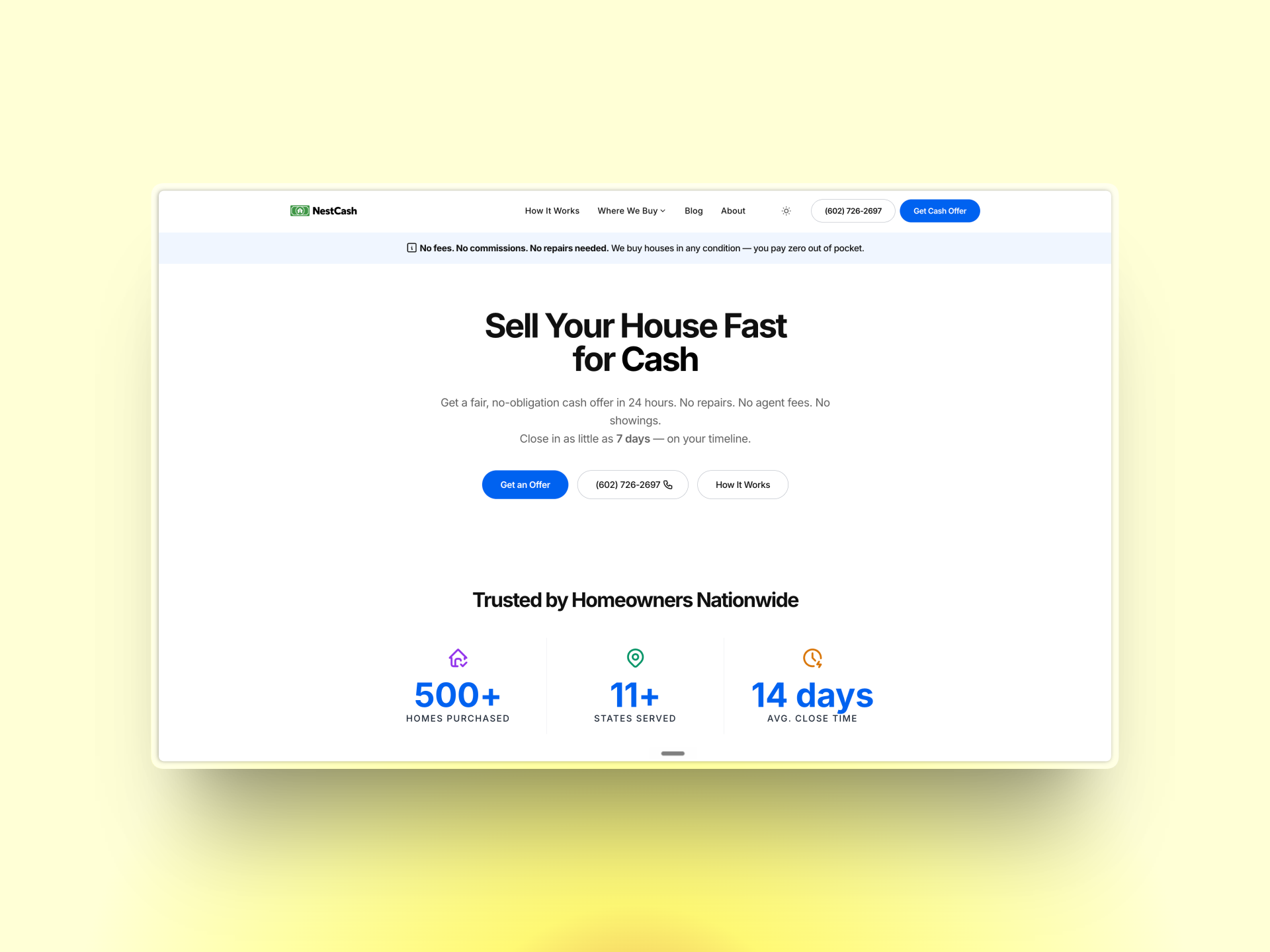
NestCash
An automated SEO content engine for cash home buying: 70 city pages, 273+ articles, and a dual pipeline that publishes daily.
What a Winning Insurance Agency Website Actually Needs
I’ve looked at a lot of agency websites across the Phoenix metro. The ones that work share a few consistent traits, and the ones that don’t tend to be missing the same things.
- Clarity. A visitor should know within a few seconds what lines you write, where you serve, and how to reach you. If they have to dig for that information, most of them won’t bother.
- Mobile performance. More insurance search queries are happening on phones than ever before. A site that isn’t built to display cleanly across screen sizes isn’t just a minor inconvenience, it’s losing you real business.
- Local SEO that’s actually done right. That means proper page structure, city-level targeting, and content that reflects how real people in the Phoenix area search for coverage. This isn’t something you bolt on after the fact. It has to be part of how the site is built from the beginning.
- Trust signals. Reviews, clear contact information, carrier relationships you can mention, years in business, community ties. These aren’t nice-to-haves. In a low-trust category like insurance, they’re often what gets someone to fill out the quote form instead of bouncing.
- A fast, obvious path to contact. Buried forms and outdated phone numbers kill conversions. The goal of the site is to get a qualified prospect on the phone with you. Everything on the page should work toward that.
What I Do Differently
I run Carter Pixels as a solo studio, which means when you hire me, you’re working with me directly. There’s no account manager translating your feedback to a developer you never meet. I’m the one asking you questions, building the pages, and making sure the final product actually reflects your agency.
I build custom sites, not modified templates. Every page is structured around your specific services, your market, and the cities in the Phoenix area where you want to win business. You can see my recent builds to get a feel for how I approach this kind of work.
A good example of my thinking in action is the Mattur project, a B2B professional-services site where credibility and clarity had to do the heavy lifting. Insurance agency sites face a similar challenge. The design has to look polished and feel trustworthy, but it also has to convert. Those two goals aren’t in conflict when the site is built thoughtfully.
I’m not the right fit for every agency. If you want the cheapest option or a site spun up in a weekend, there are plenty of platforms that will do that for you. What I offer is a considered, custom build made for an established local business that’s serious about growing its book. If that’s where you are, the city pages below are a good place to start.
Frequently asked questions
Templates are generic by design. A custom site lets you speak directly to your local market, highlight the lines you actually write, and build the kind of trust that converts a visitor into a paying client. In a business where credibility is everything, a cookie-cutter site works against you.
At minimum: clear coverage categories, a fast and obvious way to request a quote, mobile-friendly design, local SEO optimization, and a click-to-call button. Positive Google reviews displayed on the site also help, since they directly influence where your agency appears in local search results.
Very. Most people shopping for insurance start with a Google search, and the agencies that show up in those local results win a disproportionate share of new business. A site built with local search in mind, targeting specific cities and coverage types, is one of the most reliable ways to keep your pipeline moving.
Most projects move from kickoff to launch in four to eight weeks, depending on how quickly we align on content and approvals. I keep the process lean because I work solo, which means fewer handoffs and faster decisions.
Mostly independent and small agencies. That's actually the sweet spot for what I do. You're established enough to invest in a serious website, but small enough that a one-size-fits-all platform isn't going to cut it for you.